Key Facts
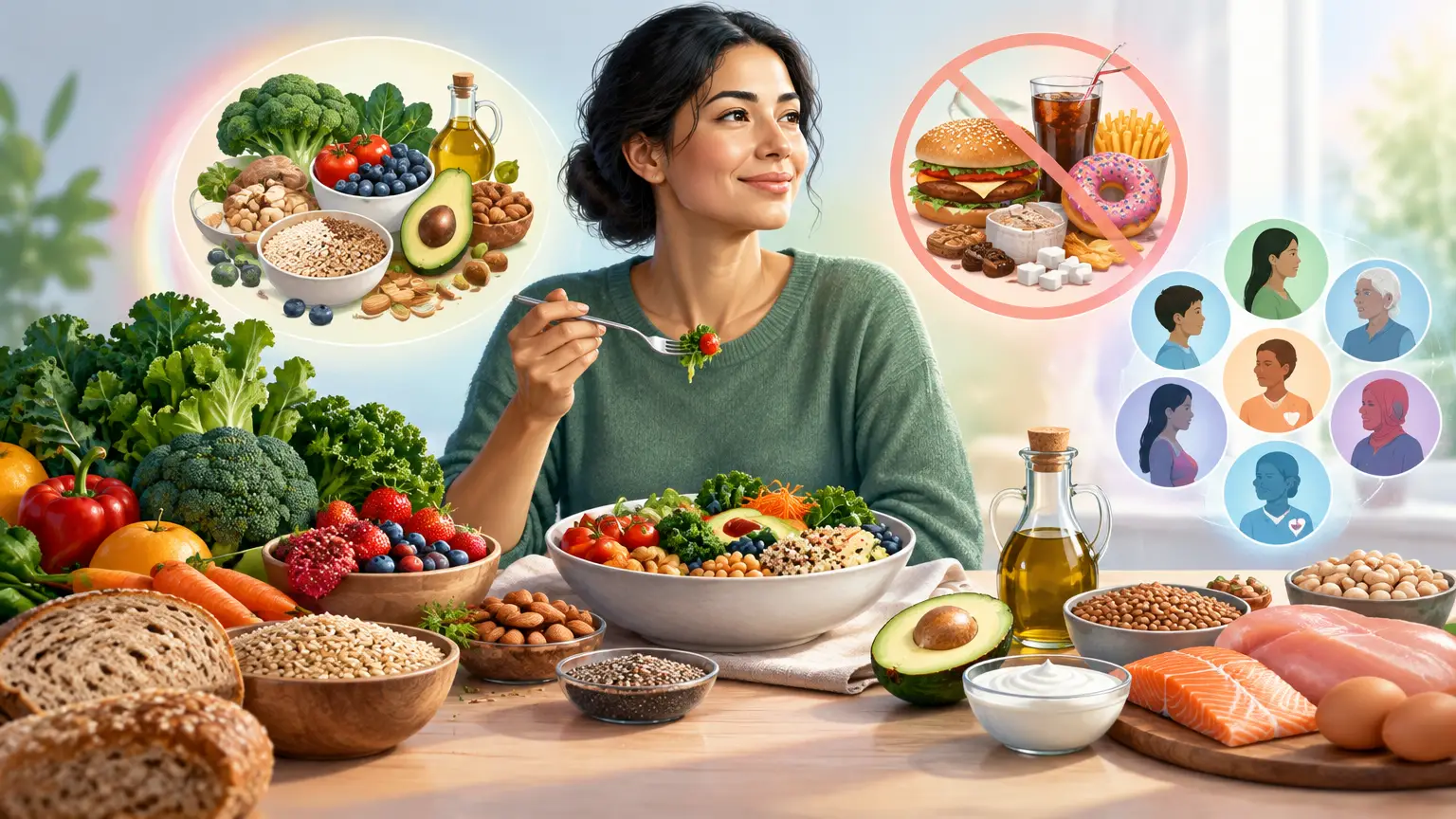
- The 2025–2030 Dietary Guidelines for Americans emphasize whole, nutrient-dense foods such as vegetables, fruits, whole grains, lean proteins, and healthy fats.
- They recommend limiting processed foods, added sugars, refined carbohydrates, and sodium to improve health outcomes.
- Protein intake guidelines have increased, suggesting 0.54 to 0.73 grams per pound of body weight daily.
- Healthy fats from nuts, seeds, avocados, and olive oil are encouraged, while saturated fats from fatty meats and full-fat dairy are advised to be limited.
- Individual dietary needs vary by age, health status, and cultural preferences, making personalization important (Nutrition: MedlinePlus; Nutrition: MedlinePlus; Healthy Eating Tips; What you need to know about the new dietary guidelines - Harvard Health).
**Source-Based Paraphrases**
- Government and health organizations advocate for diets centered on whole foods and nutrient density, reducing processed and high-sodium foods to lower disease risk.
- Updated guidelines increase recommended protein intake but face debate over the health implications of higher animal protein and saturated fat consumption.
- The guidelines allow flexibility for cultural and individual adaptations, recognizing no single diet fits all (Nutrition: MedlinePlus; Healthy Eating Tips; What you need to know about the new dietary guidelines - Harvard Health).
**Summary**
The best kind of nutrition, according to recent authoritative guidelines, focuses on consuming whole, nutrient-rich foods while limiting processed items, added sugars, and excess sodium. Increased protein intake and inclusion of healthy fats are key components, though some recommendations, especially regarding animal protein and saturated fats, remain debated. Personalization based on individual health and cultural factors is essential for optimal nutrition outcomes.
**Verified Sources**
- devtestdomain.nih.gov
- Nutrition: MedlinePlus
- Nutrition: MedlinePlus
- Healthy Eating Tips
- What you need to know about the new dietary guidelines - Harvard Health

Source verification: Verified | Checked direct sources: 5 | Independent domains: 5
AI assessment: The article accurately reflects the 2025–2030 Dietary Guidelines for Americans and is supported by authoritative sources including MedlinePlus, CDC, and Harvard Health. It responsibly notes the emphasis on whole, nutrient-dense foods, increased protein intake, and healthy fats while acknowledging ongoing debates about animal protein and saturated fats. The article fairly presents the need for personalization and cultural adaptation, with no material factual errors detected. Source quality is high, though some claims about protein and fat remain areas of expert discussion.
Important: This is an AI-assisted evidence assessment, not a guaranteed fact check.
Comment to article author