Key Facts
- AI companies have dramatically increased lobbying efforts, spending about $1.2 billion annually by Q3 2026, involving over 900 firms (AI Lobbying Q3 2026: The $1.2B Battle to Write the Rules).
- High-level private meetings occur, such as Anthropic CEO Dario Amodei dining privately with President Trump (www.axios.com).
- Legislative proposals like the "Ban Artificial Superintelligence Act" seek to halt advanced AI development pending safety guidelines, with severe penalties for violations (apnews.com).
- Concerns exist about regulatory capture, where industry influence might overshadow public interest in AI governance (www.axios.com; AI Lobbying Q3 2026: The $1.2B Battle to Write the Rules).
**Source-Based Paraphrases**
- AI companies argue private access to the President enables informed policymaking that keeps pace with rapid technological advances (www.axios.com; AI Lobbying Q3 2026: The $1.2B Battle to Write the Rules).
- Critics warn that such access risks regulatory capture, potentially prioritizing industry interests over ethical and public welfare concerns (www.axios.com).
- The debate centers on balancing innovation incentives with robust oversight to prevent AI-related harms amid uncertain regulatory effectiveness (apnews.com; www.axios.com).
**Summary**
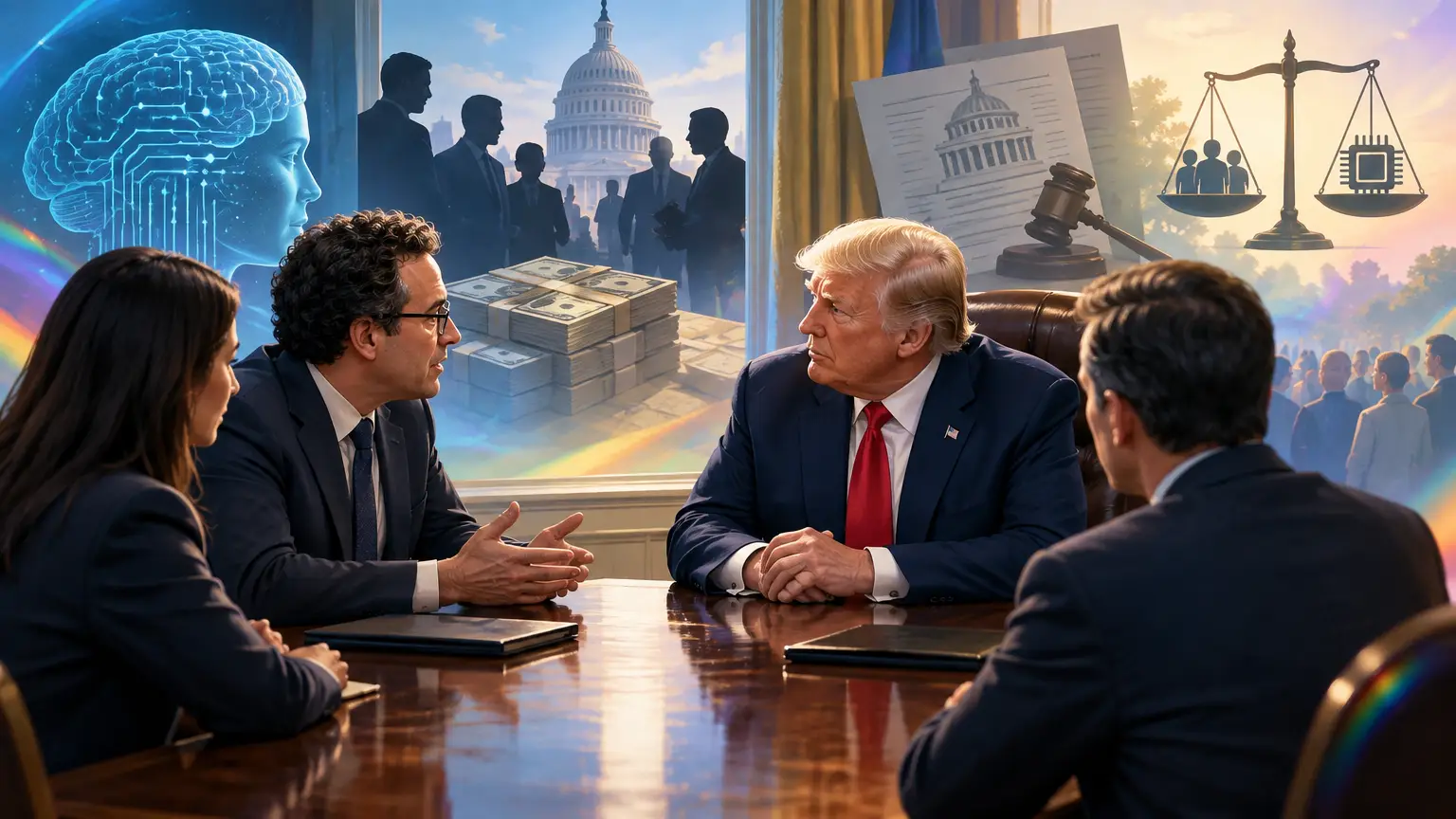
The question of whether AI companies should have private access to the President has become prominent amid rapid AI advancements and their societal impact. Proponents see private access as essential for informed, agile policymaking, while critics caution it may lead to undue industry influence and regulatory capture. This debate highlights the challenge of balancing innovation with effective oversight in AI governance, especially as legislative efforts seek to impose strict controls on advanced AI development (apnews.com; www.axios.com; AI Lobbying Q3 2026: The $1.2B Battle to Write the Rules).
**Verified Sources**
- apnews.com
- www.axios.com
- www.forbes.com
- AI Lobbying Q3 2026: The $1.2B Battle to Write the Rules
- The AI Lobby
Source verification: Verified | Checked direct sources: 5 | Independent domains: 5
AI assessment: The article is well-supported by multiple authoritative sources including reputable news outlets and detailed lobbying data, confirming the central question about AI companies' private access to the President and the associated lobbying efforts. It fairly presents multiple viewpoints—proponents' arguments for informed policymaking and critics' concerns about regulatory capture—without making unwarranted definitive claims. Some sources are behind paywalls or access-restricted, slightly limiting independent verification, but the overall evidence base is strong and recent. No material factual errors or invented details were found.
Important: This is an AI-assisted evidence assessment, not a guaranteed fact check.
Comment to article author