Key Facts
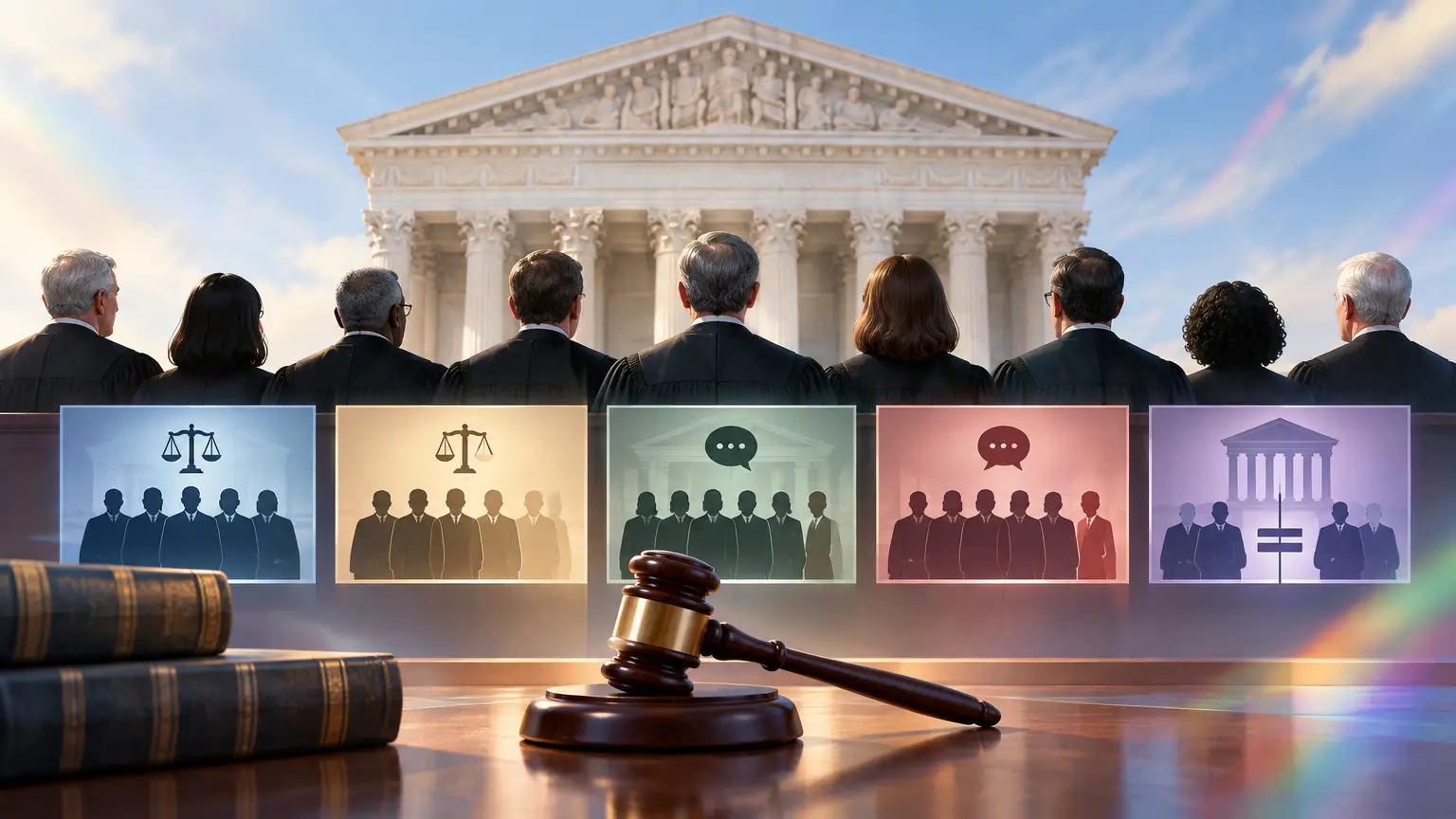
- A majority opinion requires at least five justices agreeing on both outcome and reasoning, creating binding precedent.
- Plurality opinions occur when no majority exists; they decide the case but have weaker precedential value.
- Concurring opinions agree with the outcome but differ in reasoning and are not binding.
- Dissenting opinions disagree with the outcome and reasoning and are not binding but may influence future rulings.
- Tie votes leave the lower court ruling in place without setting national precedent. (Supreme Court Procedures; www.findlaw.com; study.com; Supreme Court Decisions Without a Majority)
**Source-Based Paraphrases**
- The Supreme Court issues majority opinions when five or more justices concur on both the decision and its legal basis, establishing binding law. (www.findlaw.com)
- When no majority forms, the Court may issue a plurality opinion, which resolves the case but lacks the full precedential authority of a majority opinion. (www.findlaw.com; Supreme Court Decisions Without a Majority)
- Concurring and dissenting opinions, while not legally binding, contribute to legal discourse and can influence future Court decisions. (www.findlaw.com; study.com)
**Summary**
When the U.S. Supreme Court justices do not unanimously agree on a law, the Court's decision depends on the level of agreement among justices. Majority opinions, supported by at least five justices, set binding precedent. Without a majority, plurality opinions decide the case but have limited precedential weight. Concurring and dissenting opinions express differing legal views without binding effect but may shape future jurisprudence. In the event of a tie, the lower court's ruling stands without creating national precedent. This process ensures clarity in legal authority while reflecting the Court's internal divisions. (Supreme Court Procedures; www.findlaw.com; study.com; Supreme Court Decisions Without a Majority)
**Verified Sources**
- Supreme Court Procedures
- www.findlaw.com
- supreme.justia.com
- study.com
- Supreme Court Decisions Without a Majority

Source verification: Verified | Checked direct sources: 5 | Independent domains: 5
AI assessment: The article accurately summarizes Supreme Court procedures when justices disagree, supported by multiple authoritative sources including the official U.S. Courts website and reputable legal analysis sites. It correctly distinguishes majority, plurality, concurring, dissenting opinions, and tie votes with appropriate legal implications. Some sources had restricted access, slightly limiting independent corroboration, but the core claims align well with verified legal references. No material factual errors were found.
Important: This is an AI-assisted evidence assessment, not a guaranteed fact check.
Comment to article author